小鳥の歌 7 and 8

Darkness surrounding
My senses as I reel
Closing around me
Morpheus, why hasten you
Here, so far from your kingdom?

Make haste, make haste, there
Is no more time for dreaming
Time creeps upon you
Yoshitsune descending
On heedless Dannoura

Notes:

Links: Midnight vigil to Darkness surrounding, why hasten you to make haste

First poem actually describes a fainting spell, can also mean depression. Morpheus is the Lord of Dreams.

Second poem notes there is not time for dreaming. I am trying to finish a project and am (as usual) running late. Yoshitsune descending upon Dannoura refers to the Battle of Dan no Ura, the final battle of the Genpei War (between the Minamoto and Taira clans, April 25th, 1185). Although mostly a sea battle, the land forces of the Taira were on a beach at Dan no Ura (which literally means “beach platform), when Minamoto no Yoshitsune came down upon them with his forces, riding down a very steep cliffside in a sneak attack.

小鳥の歌 6

Arm as a pillow
I gaze at your sleeping form
Blessedly peaceful
My midnight vigil begins
While you doze like an infant

Notes: link Hand reaching to arm as a pillow.

Arm as a pillow is a makurakatoba, indicating sleeping with someone, often after intercourse.

The “feeling” is actually more comic in effect than early classical Japanese poetry, but believe me, it was truly felt.

小鳥の歌 5

Your radiant smile
Still has the power to stir
My love-wary heart
So weary of Love’s cruel games
I extend a cautious hand

Link: radiant stars to radiant smile
Attempt at kakekatoba (pivot word) with the wary/weary pun. Not sure I like it, I ended up repeating “love” as well. I suppose I might have used “Cupid’s games” instead? Oh, well, tanka: one and done. Move on.

小鳥の歌 4

The world keeps spinning
All things alight in their time
Nothing is constant
Even the darkest night is
Pierced by the radiant stars

Notes:

Link: “The world turned upside down” to “the world keeps spinning”.

Alight can mean “to descend” or “to come off of”, or it can also mean to “suddenly chance upon”. The ambiguity is purposeful.

This poem counters the negative uncertainty of the previous poem with a more positive feeling.

小鳥の歌 3

Time interrupted
The earth danced beneath my feet
Yet my heart stood still
Be content, the times lament
The world turned upside down

Notes:

This morning, an earthquake of 5.6 on the Richter scale hit Pawnee, OK. It was felt throughout seven states, and quite strongly here, shaking our house for about a minute. It was my first earthquake and I wasn’t sure what to think about it (neither was my cat, Ryoko, who was sitting nearby!).

Link to the previous verse: one moment, much like another–my heart stood still

“Be content, the times lament” and “the world turned upside down” are from the 17th century song The World Turned Upside Down, which refers to the banning of certain Christmas traditions during the English Civil War.

And yes, this is the song Lin Manuel-Miranda refers to in the song “Yorktown” from Hamilton the Musical, and I’ll be truthful, I would not have known about the other without his reference.

The phrase “the World Turned Upside Down” actually dates back to the Book of Acts 17:6, King James Version.

I especially liked the “Be content, the times lament” which speak as clearly now as when the words were written in 1646. It was a common for Japanese poems to refer to entire phrases from ancient tanka, knowing that the meaning would be understood. The practice was called makurakatoba. It was understood that cultured people would catch the earlier reference. Sometimes these makurakatob

小鳥の歌2

Misty-eyed, I wait
Trembling to hear the news
Today, tomorrow
It all has become the same
Distilled into one moment

Notes:

Ties to the previous poem: Misty-eyed from “Mist rising”, repeating the theme of “future becomes the past” by emphasizing the loss of the sense of time passing.

My cat Nabiki fell ill suddenly and I had to take her to the vet. Since they had to fit her in between appointments, I ended up waiting all day, sick with worry about her.

Buddhism teaches that time is a human construct that causes suffering. There is no yesterday or tomorrow, only today, only this moment we live in. Unfortunately, this minute was all about anxiety and sorrow.

Admin Note

For any new readers, please forgive all these posts. I am moving this information over from Livejournal, but since it was set up as a community and not a journal, WordPress will not import my entries. So I will be posting a lot over the next few days. ごめんなさい。

小鳥の歌 1

平成二十八年九月一日
A sparrow singing
Amidst the cicadas’ cries
Welcoming twilight
Winds in the east, mist rising
Future mirroring the past

Notes:
Birdsong will be a continued theme
Cicadas’ cries mark the end of summer and the beginning of autumn
They are loudest at twilight, but also, they sing as they die, as the summer dies
The last two lines call back to “Winds in the East” from Mary Poppins (lyrics by Robert and Richard Sherman)

“Winds in the east, mist comin’ in
Like somethin’ is brewin’, about to begin.
Can’t put me finger on what lies in store,
But I feel what’s to happen all happened before.”

Zukin again

Battling con crud from Worldcon this week. I’m supposed to be doing a translation for someone, but my brain is so fuzzy that I haven’t been able to concentrate, so I’ve been sewing on part of my Queen’s Prize Project, which is on zukin (hoods). I’m doing the sode-zukin (which is the wimple kind of zukin that I did for that paper I wrote years ago), the zukin from The Maple Viewers (and yes, what those ladies are wearing ARE zukin–I’ve found modern variants), a mousu (which looks like a sode-zukin, but are larger) and if I have time, a kato no kesa 裏頭(か[くわ]とう)の袈裟(けさ), which is what the sohei warrior monks wore. The kanji translates as “a kesa worn on the head”. Kesa is a Buddhist religious garment usually worn over kimono as a kind of apron.
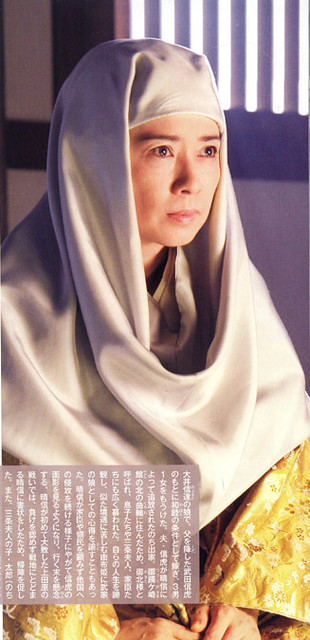
zukin

Sode-zukin example from the NHK taiga drama Fuurin Kazan.

I’m really excited about this last one–I kept wondering why I would sometimes see seam lines on what usually looks like just a rectangular white cloth tied around the head. It’s a kesa! And kesa are usually sewn with what is called the rice-field pattern. And THAT explains the seam lines!
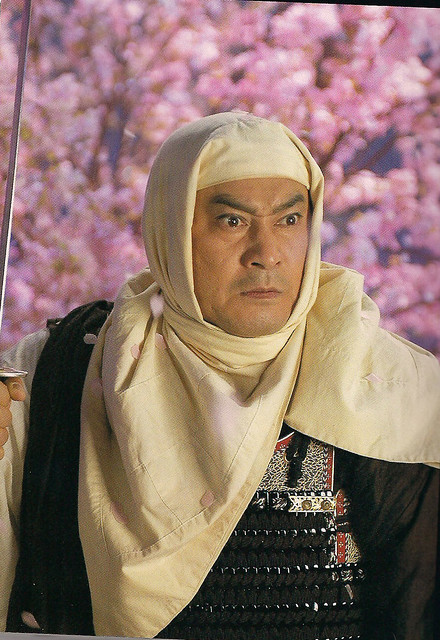
Benkei

From the NHK Drama Yoshitsune, the Warrior Monk Benkei is wearing a Kato no Kesa.

The only thing is I will have to sew like the wind to get the thing done in time and with the pattern, that’s going to be tricky. Plus I still have to write up the information, in a simple format since this is not a literary entry. But I still have almost 3 weeks. I might skip the mousu (which I don’t have as much info about, just an entry from the Japanese Costume Museum) and concentrate on the kato no kesa instead.

Ingibiorg, who also does Japanese poetry here in Calontir, did a poetry exchange with me this summer and asked if she could enter it as an A&S entry for Cattle Raids (an event up in Lincoln, Nebraska where she lives). We each wrote up explanations about our respective poems and how we took elements from each other in the exchange. I think she was going to present the poems on some marbled paper or something? Anyway, no word as to how that turned out. I hope she got some good feedback, since most people tend to ignore poetry entries.

I totally should be sleeping right now

God bless obsessive manga artists who blog about their work and how they are going to draw medieval Buddhist outfits by making little drawings showing how said outfits are put together. Sure, it’s a tertiary source, but given the lack of primary and secondary sources in English (except photos of emaki, paintings, and statues, and some spare descriptions on the Japanese Costume Museum site), I’ll take it. Got a lot of translation to do, though. (PS, I will share the source later once I get some things translated, including the artist/writer’s name, so I can properly credit). (PSS: Won’t be this week, cause Worldcon.) Oh, and those cloth hats the ladies are wearing in The Maple Viewers? So totally zukin. Like I said. *vindication feels like victory*