小鳥の歌 66

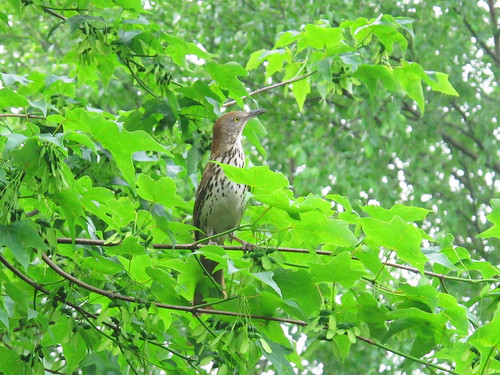
Brown Thrasher 3

Clicking and chirping
The Brown Thrashers go about
Their birdie business
You little fools, don’t you know
A storm is about to break?

Link: thematic. Birds “warbling in the wind” to “go about their birdie business”

I have a pair of Brown Thrashers hopping about the maple tree outside my window, maybe courting? But the skies are growing dark and we are under a tornado watch. They’re still at it as I type! And yes, I might be referring to what is going on in America politics right now.

小鳥の歌 65

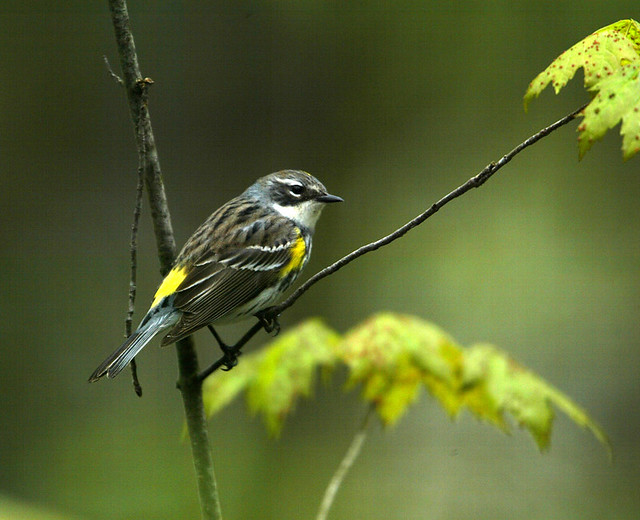
Yellow-Rumped Warbler

Little black-winged bird
Clinging to the maple twig
Warbling in the wind
Tarry a while away
My wasteful wearisome woes

link: woe to woe, topic continues theme on surcease of sorrow. Found a rare English kakekotoba ( 掛詞 ) pivot word in “while”. I actually had to look up whether it was while away or wile away and it turns out both are correct in a different fashion. It turns out that “while away” is a vestigial remnant of an archaic use of “while” as a verb meaning “to spend time pleasantly”. “Wile” denotes some kind of trickery, which could have also worked:

Tarry a while, wile
Away my wearisome woes

I suppose I could have doubled the “while”

Tarry a while, while
Away my wearisome woes

Which actually does sound better to my ears, BUT pivoting on the “while”, which changes meaning depending on whether it connects with the words before or after, is EXACTLY how a pivot word (kakekotoba) works in Japanese.

Oh, the bird was a Yellow-rumped Warbler, quite common here in Kansas. But there is just no way to make “Yellow-rumped Warbler” sound elegant.
Notes from Successful! Event Planning

Someone on FB was requesting copies of this handout from a class I taught several years ago. I’ve tried to update the information somewhat, but it’s probably a little flawed. However, some might find it useful. In the class, I had also handed out a few copied forms from “Autocratting 101: A Comprehensive Guide for Planning SCA Events” (Compleat Anachronist #113, Fall 2001), but as that is copyright material, I will not post those here. The pamphlet is still available from the SCA Publications Online Store and although it needs updating, still has some excellent advice and useful forms for groups planning an event.

You can find the handout here: Successful! Event Planning.

小鳥の歌 61

Awake and aware
Each moment is a treasure
Just outside my grasp
My heart is chained to the past
My thoughts snared in the future

Link: aware to aware. Also a thematic link regarding Buddhism.

There is some complex wordplay going on here. I am writing about bodhi, which we would translate into “enlightenment”, although the word root is “budh” (to awaken). Aware is an interesting false friend. In English, aware means to be mindful, conscious, alert. In Japanese, aware (pronounced AH-WAH-RE) which roughly translates to pity, sorrow, or pathos. In Japanese poetry, aware is often used as a exclamation, the same way alas is used in English poetry.